

Apollo’s Sambur says software’s AI troubles will persist, noting the ‘very large unknowns’
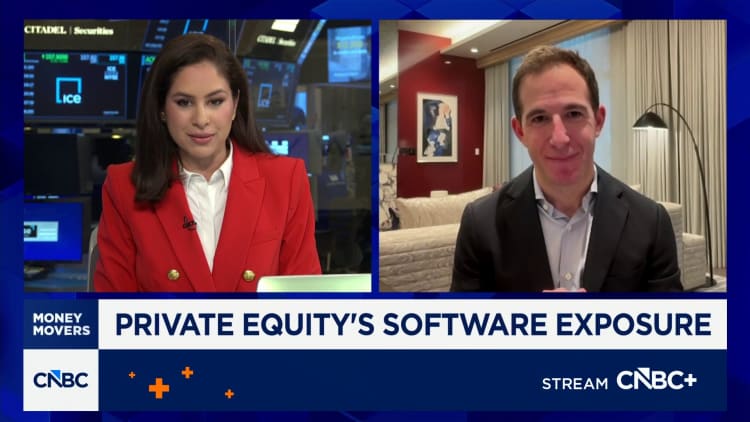
Apollo Global Management‘s David Sambur told GWN on Thursday that the selloff in software stocks from fears of artificial intelligence disruption is far from over.
“I unfortunately think it’s very early,” Sambur, who is co-head of private equity, told GWN’s “Money Movers.”
Some Wall Street analysts have been comforted by the recent rebound in the IGV Software ETF, which has climbed about 3% in March following a bruising start to the year. The ETF is still down 20% this year.
Sambur said software names are under scrutiny and facing critical questions revolving around their revenue model, gross margin profile and valuations with competition intensifying from Anthropic and OpenAI.
“I know the markets are moving up and they’ve rebounded a little bit, but I don’t see any of those four things changing because of the real question mark about what the impact [is] of AI lowering the cost to compete, and therefore increasing the level of competition,” he said.
Sambur, who joined Apollo in 2004, said the displacement from AI will be significant and “is faster than I’ve ever seen at any point in my career.”
Part of the issue, Sambur said, is that the industry is unable to figure out how the software story will evolve in the next one to five years because the technology itself is constantly changing.
“No one knows,” he said.
“People are now recalibrating the valuations and baking in more margin of safety for very large unknowns,” he added.
It speaks to why most software companies have taken a conservative stance when detailing their outlook for the year.
Sambur also noted investing opportunities in deals or buybacks as a growing list of software names, including Intuit, Hubspot and Salesforce, have announced share repurchases.
However, as RBC Capital’s Rishi Jaluria wrote in a note to clients on Thursday, for the most part, buyback announcements are being overshadowed by AI fears.
Jaluria said the debate taking place right now on Wall Street is whether share repurchases are a bullish signal or companies “waving the white flag.” He added that buybacks lower the likelihood of mergers and acquisitions, which could put a lid on innovation.
“If companies are funding buybacks with major cash balances on hand, that’s one thing, but huge buybacks mean less capital for future M&A, especially if raising debt,” wrote Jaluria.’