

Fintechs like Block and PayPal are battling like never before to be your all-in-one online bank
Jack Dorsey, co-founder of Twitter Inc., speaks right through the Bitcoin 2021 convention in Miami, Florida, U.S., on Friday, June 4, 2021.
Eva Marie Uzcategui | Bloomberg | Getty Pictures
Jack Dorsey’s Prohibit were given began as Sq., providing tiny companies a easy strategy to settle for bills by the use of smartphone. Verify started as a web based lender, giving shoppers extra inexpensive credit score choices for retail purchases. PayPal upended finance greater than 25 years in the past through letting companies settle for on-line bills.
The 3 fintechs, that have been each and every introduced through tech luminaries in numerous eras of Silicon Valley historical past, are more and more converging as they search to turn out to be digital all-in-one banks. Of their untouched profits stories this life, their grand ambitions changed into extra unclouded than ever.
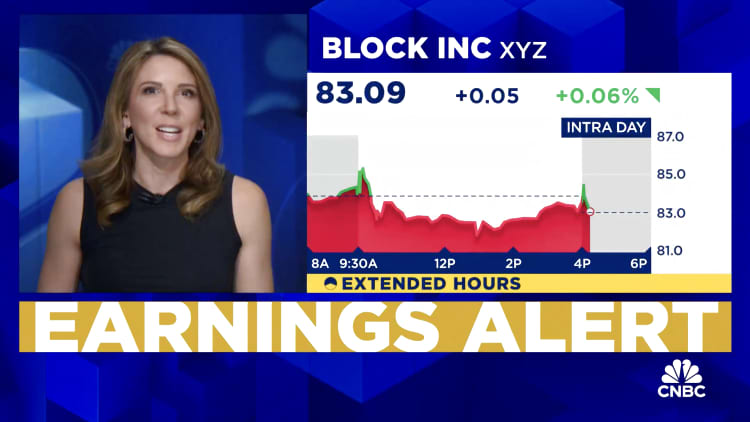
Prohibit used to be the utmost of the 3 to document, and the high-level numbers have been troubling. Profits and earnings neglected estimates, sending the keep ailing 18%, its steepest loose in 5 years. However to listen to Dorsey talk about the effects, Prohibit is effectively imposing a method of providing shoppers the power to pay companies through smartphone, ship cash to buddies thru Money App, and get admission to credit score and debit products and services date additionally getting extra tactics to spend money on bitcoin.
“In 2024, we expanded Square from a payments tool into a full commerce platform, enhanced Cash App’s financial services offerings, and restructured our organization,” Dorsey stated on Prohibit’s profits name on Thursday nearest the bell.
Prohibit and an increasing roster of fintech opponents have all come to look that their moats aren’t sturdy plenty of their core markets to reserve the contest away, and that the trail to enlargement is thru a various i’m ready of monetary products and services historically introduced through banks. They’re enjoying to an target market of digital-first shoppers who both didn’t develop up the use of a brick-and-mortar storehouse or learned at an early past that that they had disagree want to ever i’m ready substructure in a bodily area, or to fulfill with a mortgage officer or customer support rep.
“Longer term, we see a significant opportunity to grow actives, particularly among that digital-native audience like Millennial and Gen Z,” Prohibit CFO Amrita Ahuja stated at the profits name.
As a part of its enlargement, Prohibit has encroached on Verify’s turf, with an expanding focal point on purchase now, pay next (BNPL) choices that it picked up in its $29 billion acquire of Afterpay, which closed in early 2022. Prohibit’s marketplace proportion in BNPL higher through one level to 19%, date Verify held its place at 17%, in line with a contemporary document from Mizuho. Each corporations are outperforming Klarna in BNPL, the document stated.
Prohibit’s BNPL play games is now join into Money App, with an integration activated this future that provides customers in a different way to construct purchases thru a unmarried app. With Money App per month lively customers stagnating at 57 million for the utmost few quarters, the corporate is fascinated by engagement instead than speedy person acquisition.
“We predict that there’s vital alternative for enlargement long term, however there are some planned choices we’ve made as a part of our banker-based technique within the alike time period” that have kept user numbers from increasing, Ahuja said. “This is part of our steady improvements to power wholesome buyer engagement as we storehouse our bottom.”
Compared to Block, Wall Street had a very different reaction to Affirm’s earnings earlier this month, pushing the stock up 22% after the company’s results sailed past estimates.
Affirm founder and CEO Max Levchin, who was previously a co-founder of PayPal, built his company with the promise of giving consumers lower-cost and easy-to-tap intstallment loans for purchases like electronics, jewelry and travel.
The BNPL battlefront
In its latest earnings report, Affirm posted a 35% increase in gross merchandise volume to $10.1 billion. Revenue surged 47% to $770 million, while its active consumer base grew 23% to 21 million.
Beyond BNPL, Levchin has pushed Affirm into debit with the Affirm Card, which now has 1.7 million active users, up 136% year-over-year.
“Anything else we can do to personalize the enjoy, to offer family a probability to really feel like that is the most efficient backup they’ve to their debit or their bank card is what we’re busy with,” Levchin said on the earnings call. He said the goal is to get the card to 20 million users, spending on average $7,500 per year.
Affirm is also partnering with FIS to bring its debit card functionality to traditional banks.
Levchin left PayPal in 2002, after the company was acquired by eBay. It was a decade before he’d start working to help popularize the modern day BNPL market.
Now his former employer, which spun back out from eBay in 2015, is in on the BNPL game.
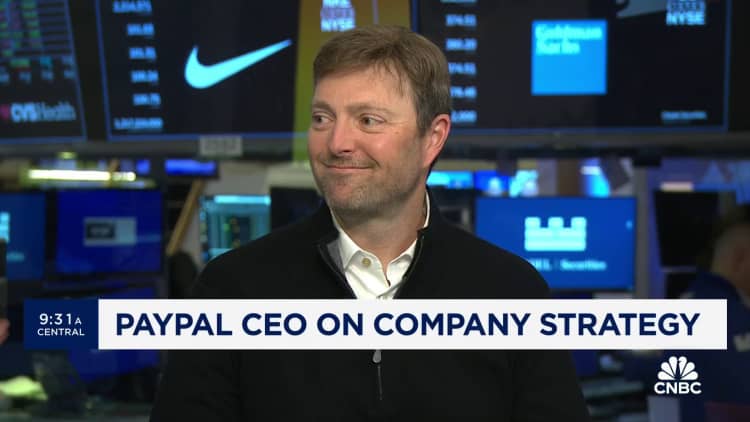
Under the leadership of CEO Alex Chriss, who took over the company in September 2023, PayPal is in the midst of a turnaround that involves working to better monetize products like Braintree and Venmo and joining the world of physical commerce with a debit card inside its mobile app.
Investors responded positively in 2024, pushing the stock up almost 40% after a brutal few years. But the stock dropped 13% after its earnings report, even as profit and revenue were better than expected. PayPal’s total payment volume for the quarter hit $437.8 billion, slightly below projections, while transaction margins rose to 47% from 45.8% — a sign of improving profitability.
One of Chriss’ big pushes is to get more out of Venmo, which has long been a popular way for friends to pay each other but hasn’t been a big hit with businesses. Venmo’s total payment volume in the quarter rose 10% year-over-year, with increased adoption at DoorDash, Starbucks, and Ticketmaster.
PayPal is also promoting Venmo’s debit card and “Pay With Venmo,” which saw 30% and 20% monthly active growth in 2024, respectively. The company is introducing new services to improve merchant retention, including its Fastlane one-click checkout feature, designed to compete with Apple Pay and Shopify’s Shop Pay.
Last year, the company launched PayPal Everywhere, a cashback-driven initiative designed to boost engagement within its mobile app. Chriss said on the earnings call that it’s “using vital will increase in debit card adoption and opening pristine divisions of spend.”
As with virtually all financial services products, the new offerings from Block, Affirm and PayPal are designed to produce growth but not at the expense of profit. Banks operate at low margins, in large part because there’s so much competition for lower-priced loans and better cash-back options. There’s also all the costs associated with underwriting and compliance.
That’s the environment in which fintechs have to operate, though without the costs of running a network of physical branches.
Levchin talks about helping customers spend less, not more. And Block acknowledges the need for hefty investments to reach the company’s desired outcome.
“This is part of our steady improvements to power wholesome buyer engagement as we storehouse our bottom,” Ahuja said. “We’ve made investments in crucial fields like compliance, assistance and possibility. And as we’ve finished that, we’ve improved extra of our actives thru our identification verification procedure, which in flip, unlocks larger get admission to to these actives to our complete suite of monetary gear.”
WATCH: GWN’s full interview with PayPal CEO Alex Chriss