

How Huawei ascended from telecoms to become China’s ‘jack of all trades’ AI leader
The Huawei sales space on the Cell International Congress in Barcelona, 2025.
Arjun Kharpal | GWN
In spite of being crushed i’m sick via years of U.S. industry restrictions, China’s telecom immense Huawei has quietly emerged as one of the crucial nation’s fiercest competition throughout all of the AI terrain.
Now not best does the Shenzhen-based company seem to constitute Beijing’s resolution to American AI chip darling Nvidia, however it has additionally been an early adopter of monetizing synthetic prudence fashions in commercial packages.
“Huawei has been forced to shift and expand its core business focus over the past decade… due to a variety of external pressures on the company,” mentioned Paul Triolo, spouse and senior vice chairman for China at advisory company DGA-Albright Stonebridge Team.
This enlargement has perceivable the corporate get focused on the entirety from shrewd vehicles and working programs to the applied sciences wanted for the AI growth, equivalent to complicated semiconductors, knowledge facilities, chips and massive language fashions.
“No other technology company has been able to be competent in so many different sectors with high levels of complexity and barriers to entry,” Triolo mentioned.
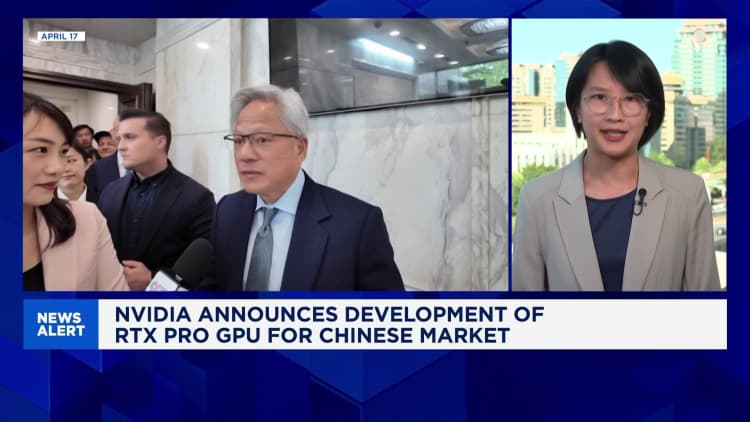
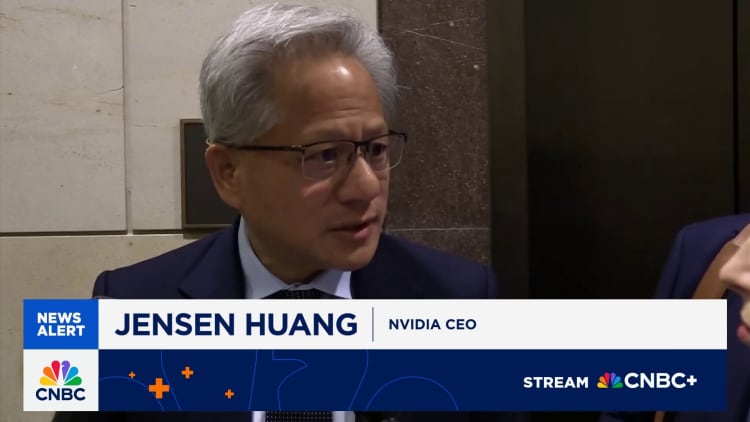
This month, Nvidia CEO Jensen Huang has turn out to be increasingly more vocal in calling Huawei “one of the most formidable technology companies in the world.” He has additionally warned that Huawei will exchange Nvidia in China if Washington continues to limit U.S. chip corporations’ exports to the Asian nation.
Nvidia surpassed $4 trillion in marketplace capitalization extreme hour to turn out to be the sector’s maximum worthy corporate. Its state of the art processors and a indistinguishable “CUDA” computing gadget stay the {industry} same old for coaching generative AI fashions and packages.
However that moat could also be narrowing, as Huawei proves that it no longer best does all of it, it does it effectively. Day difficult American AI stalwarts like Nvidia is a high form, the corporate’s historical past presentations why it will probably’t be counted out.
Phone switches to nationwide champion
Huawei, which now employs greater than 208,000 public throughout over 170 markets, got here from humble beginnings. Based via motivated entrepreneur Ren Zhengfei in 1987 out of an rental in Shenzhen, the company began as a tiny phone transfer distributor.
Because it grew right into a telecoms participant, it received traction via concentrated on much less evolved markets equivalent to Africa, the Center East, Russia and South The united states, ahead of in the end increasing to playgrounds like Europe.
By way of 2019, Huawei can be well-positioned to capitalize at the world 5G rollout, turning into a pacesetter out there. Round this while, it had additionally blossomed into one of the crucial global’s greatest smartphone producers and was once even designing smartphone chips via its chip design subsidiary, HiSilicon.
However Huawei’s luck additionally attracted expanding scrutiny from governments out of doors China, in particular the U.S., which has regularly accused Huawei’s era of posing a countrywide safety blackmail. The Chinese language corporate has refuted such dangers.
The export controls have paradoxically driven Huawei into the hands of the Chinese language executive in some way that CEO Ren Zhengfei all the time resisted.
Paul Triolo
spouse and senior vice chairman for China at DGA-Albright Stonebridge Team
Huawei’s industry suffered a significant setback in 2019 when it was once put on a U.S. industry blacklist, combating American corporations from doing industry with it.
Because the have an effect on of the sanctions kicked in, Huawei’s client industry – as soon as the corporate’s greatest via income – halved to about $34 billion in 2021 from the month ahead of.
The corporate nonetheless controlled a step forward on AI chips, and pressed forward regardless of extra U.S. restrictions in 2020 that trim the corporate off from chipmaker Taiwan Semiconductor Production Co. A month previous, Huawei formally introduced its Ascend 910 AI processing chip as a part of a option to create a “full-stack, all-scenario AI portfolio” and to turn out to be a supplier of AI computing energy.
However the U.S. concentrated on of Huawei additionally had the impact of turning the corporate right into a martyr-like determine in China, construction upon consideration it gained in 2018 when Meng Wanzhou, Huawei’s CFO and daughter of Ren, was once arrested in Canada for alleged violations of Iran sanctions.
Because the U.S.-China tech struggle persisted to increase and huge complicated chip restrictions had been put on China, Huawei was once an perceivable option to turn out to be a countrywide champion within the race, with extra impetus and situation backing for its AI plans.
“The export controls have ironically pushed Huawei into the arms of the Chinese government in a way that CEO Ren Zhengfei always resisted,” Triolo mentioned. On this means, the constraints additionally become “the steroids” for Huawei’s AI {hardware} and instrument stack.
The comeback
Then some other month of declining gross sales within the client branch, the unit began to show round in 2023 with the loose of a smartphone that analysts mentioned contained a complicated chip made in China.
The 5G chip got here as a trauma to many within the U.S., who didn’t be expecting Huawei to achieve that stage of development so temporarily with out TSMC. In lieu, Huawei was once reportedly operating with Chinese language chipmaker SMIC, an organization that has additionally been blacklisted via the U.S.
Day semiconductor analysts mentioned the size that Huawei and SMIC may just construct those chips was once seriously restricted, Huawei nevertheless had proved it was once again within the complicated chip recreation.
It was once additionally round this while that reviews started surfacing about Huawei’s pristine AI processor chip, the Ascend 910B, with the corporate taking a look to grasp upon gaps left via export controls on Nvidia’s maximum complicated chips. Pile manufacturing of the next-generation 910C is reportedly already at the means.

Subscribe now
To fill the void left via Nvidia, Huawei “has been making big strides in replicating the performance of high-end GPUs using combinations of lower chips,” mentioned Jeffrey Towson, managing spouse at TechMoat Consulting.
In April, Huawei unveiled its “AI CloudMatrix 384”, a gadget that hyperlinks 384 Ascend 910C chips in a aggregate inside knowledge facilities. Analysts have mentioned CloudMatrix is in a position to outperform Nvidia’s gadget, the GB200 NVL72, on some metrics.
Huawei isn’t simply catching up, “it’s redefining how AI infrastructure works,” Forrester analysts mentioned in a file extreme while about CloudMatrix.
In the meantime, Huawei has additionally evolved its personal “CANN” instrument gadget that acts as an additional to Nvidia’s CUDA.
“Winning the AI race isn’t just about faster chips. It also includes delivering the tools developers need to build and deploy large-scale models,” Forrester’s file mentioned, despite the fact that authors famous that Huawei’s merchandise are nonetheless no longer built-in plenty with alternative often impaired gear for builders to change over temporarily from Nvidia.
The ‘Ascend Ecosystem Technique’
Day Huawei’s objective to surpass Nvidia is perceivable as a key building in China and the U.S.’s race for AI, it’s notable to notice that chips constitute only one construction forbid of Huawei’s broader AI plans.
Huawei now has its arms all the way through the factitious prudence worth chain, from chips to computing, to AI fashions and AI packages. Those other AI industry avenues additionally leverage alternative grounds of the corporate’s giant era empire.
Actually, the corporate’s “ICT Infrastructure” industry — which incorporates 5.5G mobile community deployment and AI programs for commercial worth — become the corporate’s greatest income motive force at 362 billion yuan in 2023.
The corporate has been deploying its Ascend AI chips and AI CloudMatrix 384 at its rising portfolio of AI knowledge facilities, which can be operated via its cloud computing unit, Huawei Cloud, established in 2017 to compete with the likes of Amazon Internet Products and services and Oracle.
Those knowledge facilities, in flip, have equipped the educational functions and computing energy impaired via Huawei’s suite of AI fashions beneath its Pangu line.
In contrast to alternative general-purpose AI fashions like OpenAI’s GPT-4 or Google’s Gemini Extremely 1.0, Huawei’s Pangu style is designed to assistance extra industry-specific packages around the scientific, finance, executive, commercial and car sectors. Pangu has already been carried out in additional than 20 industries over the extreme month, the corporate mentioned extreme while.
Rolling out such AI packages incessantly comes to having Huawei tech group of workers operating for months on the challenge web site, even supposing it’s in a far off coal mine, Jack Chen, vice chairman of the promoting branch for Huawei’s oil, gasoline and mining industry unit, which supplies virtual and clever answers to grow to be those industries, informed GWN.
That analysis enabled the corporate in Would possibly to deploy extra 100 electric-powered vehicles that may autonomously shipping grime or coal the usage of the telecom corporate’s 5G community, AI and cloud computing products and services.
And it’s no longer restricted to China. The era can “be replicated on a large scale in Central Asia, Latin America, Africa, and the Asia-Pacific,” Chen mentioned.
Huawei has additionally open-sourced the Pangu fashions, in a exit it mentioned would assistance it increase out of the country and additional its “Ascend ecosystem strategy,” which refers to its AI merchandise constructed round its Ascend chips.
Chatting with GWN’s “Squawk Box Asia” on Thursday, Patrick Moorhead of Moor Insights & Technique mentioned he anticipated Huawei to push Ascend in nations a part of China’s Belt and Street Initiative — an funding and building challenge geared toward rising markets.
Over a length of 5 to ten years, the corporate may just start to create critical marketplace percentage in those nations, in the similar means it as soon as did with its telecommunications industry, he added.