

Lucian Grainge Talks AI Guardrails and New Possibilities at Nvidia’s ‘Super Bowl of AI’ Conference
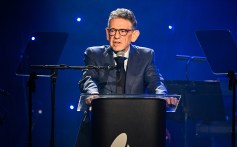
Universal Music Group chairman/CEO Lucian Grainge joined Nvidia executive Richard Kerris on stage at Nvidia’s GTC AI conference and expo on Tuesday (March 17) to talk about the opportunities artificial intelligence offers to artists — as long as the right “guardrails” are in place.
Related
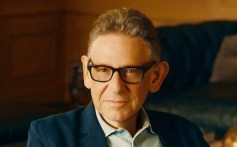
The San Jose-based conference, which Nvidia CEO Jensen Huang has described as the “Super Bowl of AI,” also featured speakers from OpenAI, Amazon, Uber, PepsiCo, Stanford University and more, speaking to a wide array of topics related to generative AI. In Grainge’s fireside conversation, called “Building the Future of Music and AI,” the top music executive made a point to compare generative AI to technologies of the past, like the drum machine and digital music tools, noting that through partnership, he believes AI can be used to artists’ benefit.
“I love change. I love disruption. I like it in my company,” Grainge said. “It’s the same with technology. We’ve always done everything that we can to lean in. It’s the same with music.”
Read an excerpt of their conversation below:
Kerris: Are there areas that you refuse to compromise on [as the leader of UMG]?
Grainge: Artists and investment… If you’re inspired by something, by a piece of music, by backing someone, it’s an investment. I have to protect the investment. That is the North Star: investment. That means in people, in talent, in ideas, in music, in scenes, in genres, and now, obviously for the last 15 to 18 years, it’s investment in technology, too.
When Spotify started, there was a lot of fear, concern, the threat of it, but you saw it differently. How did you see it as a tool in your for your company?
Every time there’s been any change — from cassettes into vinyl and obviously digital — I saw the entire creative, and sometimes the investment, community be concerned by it. I heard all the negatives about digital recording. I mean, that may sound bizarre now, but there were concerns in the artist community… I’m used to new developments and people getting used to things. Generally, when people don’t know what the future can look like, they’re obviously reticent.
You were the first company to do a deal with Facebook, I think that was a real turning point in the industry.
We were the first people to lean in and make a deal with what was Facebook at the time and again, there were always concerns about that [among artists]. I’m used to dealing with leadership and how you persuade people into understanding what the future can look like. I’m very patient. We’re quite sequential, and if it doesn’t happen overnight, it doesn’t bother me, because where the product’s right, there’s positive inevitability to it. So [UMG was also early on] UGC, I see a lot of what we’ve developed with UGC [in AI] and [that’s] why I’m so positive about AI, in terms of its relationship with the music, the songs, the artistic expression and how it can be used, enjoyed, operated, and also how it can be monetized.
Related
How do you look at AI like from where you’re at today, and where do you want it to go?
There’s been so much technology I mentioned briefly: digital, CD, vinyl, we talked about UGC. You [can also] look back at sampling, look back at the Fairlight, look back at drum machines. [Some believed] synthesizers were going to be the end of musicians. It was going to be the end of orchestras. But guess what? Musicians started to create with those machines… There’s all the DNA [of those previous innovations in AI]. As long as [artists are] respected, as long as there’s guardrails, as long as they’re not taken completely advantage of, stylistically and creatively… [we will] completely start to see over this next period where what the power of the possibility is [with AI]… [We are working on] partner products [in AI] that we’re going to be talking about in the next three, five, 10 years, and that’s [going to be] so powerful. That’s what’s so exciting, and for me, that’s what’s so inevitable [about AI in music].
You talk about artist-first AI. Tell me, what are the non-negotiable parts of where you approach AI with an artist?
I think that an artist has the right to have their voice and their lyrics to be their work. I know that Taylor Swift‘s voice shouldn’t be used on someone else’s music, for example… That’s the most important thing. I can’t have an artist’s work be mimicked into something that is completely offensive to them, you and I wouldn’t want that for each other, and it’s my job to make sure that we don’t have it happen.