Promises of ‘passive income’ on Amazon led to death threats for negative online review, FTC says

Programs walk alongside a conveyor belt at an Amazon Achievement heart on Cyber Monday in Robbinsville, Unused Jersey, on Nov. 28, 2022.
Stephanie Keith | Bloomberg | Getty Pictures
Jamaal Sanford gained an anxious e mail in Might of closing pace. The message, whose sender claimed to be a part of a “Russian shadow team,” contained Sanford’s house deal with, social safety quantity and his daughter’s school. It got here with an excessively explicit blackmail.
The sender mentioned Sanford, who lives in Springfield, Missouri, would handiest handiest be guard if he got rid of an adverse on-line evaluation.
“Do not play tough guy,” the e-mail mentioned. “You have nothing to gain by keeping the reviews and EVERYTHING to lose by not cooperating.”
Months previous, Sanford had left a scathing evaluation for an e-commerce “automation” corporate known as Ascend Ecom at the ranking website Trustpilot. Ascend’s purported trade was once the launching and managing of Amazon storefronts by and for shoppers, who would get hold of the carrier and the agreement of incomes hundreds of greenbacks in “passive income.”
Sanford had invested $35,000 in any such scheme. He by no means recouped the cash and is now in debt, in keeping with a Federal Business Fee lawsuit unsealed on Friday.
His enjoy is a key piece of the FTC’s swimsuit, which accuses Ascend of breaking federal regulations via making fraudelant claims matching to profits and trade efficiency and dangerous or penalizing consumers for posting truthful opinions, amongst alternative violations. The FTC is looking for financial sleep for Ascend consumers and to block Ascend from doing trade completely.
It’s the fresh signal of the FTC’s crackdown on e-commerce money-making schemes on summit of one of the world’s most important marketplaces, like Amazon and Airbnb. Since mid-2023, the company has sued a minimum of 4 automation firms, alleging misleading advertising practices and falsely telling consumers that they might generate passive source of revenue.
The FTC isn’t simply considering e-commerce automation companies. On Wednesday, the company mentioned it’s stepping up enforcement in opposition to firms that significance synthetic wisdom “as a way to supercharge deceptive or unfair conduct that harms consumers.” The company pointed to Ascend as an organization that it took motion in opposition to partially as a result of its claims that it impaired AI “to maximize clients’ business success.”
The FTC has additionally pledged to advance nearest firms that attempt to repress adverse opinions on-line as a part of unused laws issued this pace concentrated on pretend opinions.
Automation companies like Ascend advertise their simple cash alternatives on Instagram, TikTok and YouTube. However, their guarantees advance most commonly unfulfilled, and incessantly the storefronts get close ailing for violating insurance policies round dropshipping — the marketing of goods to consumers with out ever stocking stock — or counterfeits.
The FTC’s criticism in opposition to Ascend accused co-founders Will Basta and Jeremy Leung of defrauding customers of a minimum of $25 million thru their scheme. Shaped in 2021, Ascend has accomplished trade below a number of entity names with operations registered in states together with Texas, Wyoming and California.
Lina Khan, Chair of the Federal Business Fee (FTC), testifies sooner than the Area Appropriations Subcommittee on the Rayburn Area Administrative center Development on Might 15, 2024 in Washington, DC.
Kevin Dietsch | Getty Pictures Information | Getty Pictures
The submitting displays that the ultimatum in opposition to Sanford grew extra menacing. Two days nearest the preliminary e mail, Sanford’s spouse’s telephone lit up with a textual content message containing a picture of a severed head that once again recommended the elimination of the unflattering evaluation.
“Your husband has angered some people with his ignorance,” the textual message mentioned. “The type he does not wish to anger.”
Sanford quickly bought a safety machine for his house.
Sanford mentioned in an interview that Ascend had promised his Amazon storefront would generate plenty income to safeguard the price of stock the corporation purchased every hour on his behalf. Months went by, and his pack accumulated a “smorgasbord” of things, from LED lighting to nutrients, which Ascend bought from alternative outlets like Macy’s and House Deposit and later offered on Amazon, Sanford mentioned. The corporate impaired the dropshipping type, Sanford mentioned, which incessantly ended in the shops getting suspended on Amazon.
Amazon prohibits traders from dropshipping until they establish themselves as the vendor of file; that means their title is indexed at the bill, packing slip and alternative fabrics.
‘Depleted storagefacility accounts’
As Sanford’s gross sales sputtered and his money owed swelled, he made a form of lawsuits to Basta and Leung. Once they went unanswered, he left the adverse opinions. Sanford mentioned Ascend ultimately presented to refund him $20,000 if he would tug ailing the evaluation; however, he declined.
“I think I’m resigned to the fact that I won’t be getting my money back and now I just want accountability,” he mentioned.
Karl Kronenberger, a legal professional for Ascend, mentioned in a remark that the corporation denies ever threatening consumers and it tried to unravel any disputes “in good faith.”
“We are investigating whether a competitor of Ascend may be the driving force behind some of the allegations in the case,” Kronenberger mentioned.
Ascend’s advertising sound claimed consumers may just briefly earn hundreds of greenbacks from gross sales generated on Amazon, Walmart and alternative platforms. The corporation mentioned it had advanced proprietary synthetic wisdom gear that it impaired to spot top-selling merchandise.
E-commerce automation firms are increasingly exploiting Amazon’s third-party market, which now hosts hundreds of thousands of traders and accounts for greater than part of all items offered at the website.
Amazon didn’t grant a comment for this tale.
Ascend promoted the scheme as “risk-free,” the FTC mentioned, as a result of its buyback pledge, which successfully dedicated to construct shoppers complete in the event that they didn’t recoup their funding within 36 months.
“After consumers invest, the promised gains never materialize, and consumers are left with depleted bank accounts and hefty credit card bills,” the regulator wrote in its criticism.
So as to add a breeze of legitimacy, Ascend falsely claimed it have been featured in media retailers like Forbes, Yahoo! Finance and Industry Insider, the FTC mentioned. It basically marketed its trade on social media platforms TikTok, X, YouTube and Instagram.
Ascend faces two complaints in California that allege breach of agreement and alternative claims, in keeping with the FTC. In January, an arbitration motion was once filed in opposition to Ascend in Florida by and for 30 consumers. Nima Tahmassebi, a legal professional representing the Ascend consumers, informed GWN that the shoppers selected to remove the declaration after they discovered of the FTC case.
Tahmassebi mentioned he has been contacted via loads of people who “all but begged for legal assistance” as a result of they misplaced cash nearest paying for Ascend’s automation services and products.
“I’m talking to people who said I can’t get Christmas gifts this year because of my situation with them,” Tahmassebi mentioned. “People took money they could have applied to their kid’s college tuition. Now it’s gone, and they’re left bewildered.”
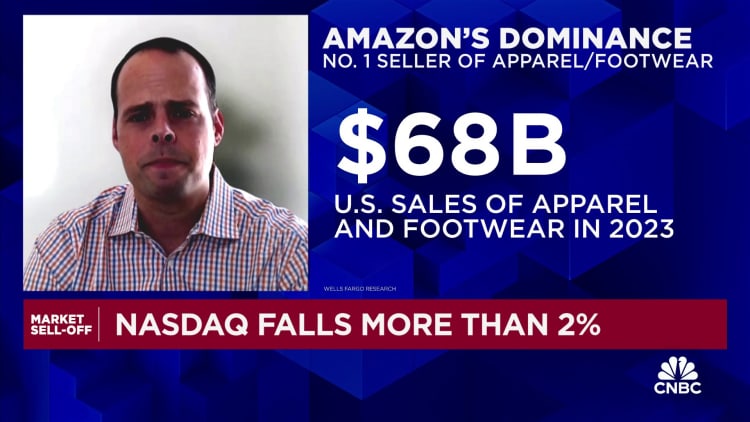
WATCH: How Amazon was 2023’s summit attire and sneakers vendor